


Mobile Digital Radiography for Bedside and Critical Care Imaging
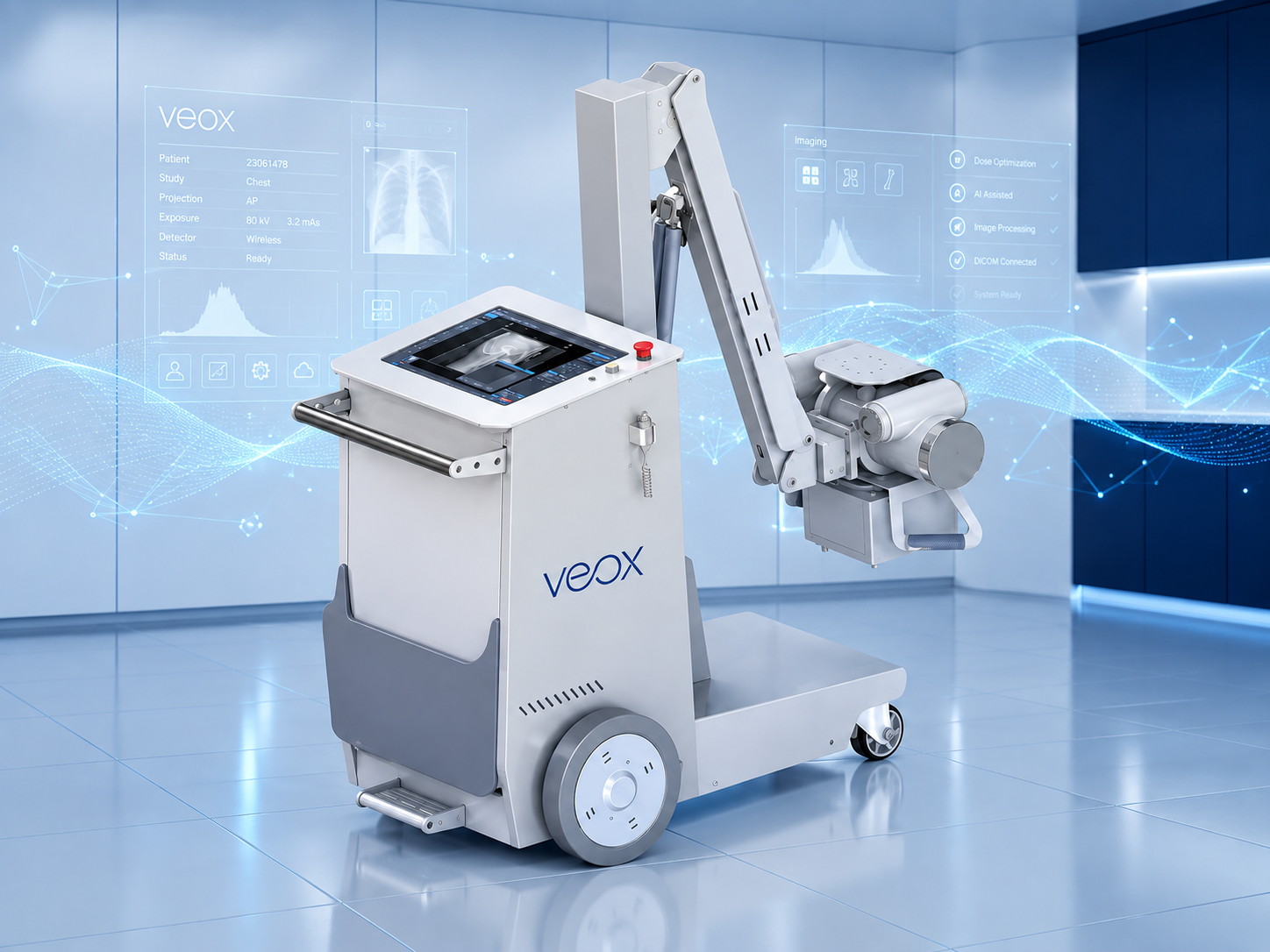
VEOX Move is a mobile digital radiography system built for imaging that travels to the patient. Two models, MX 20K and MX 32K, cover bedside, intensive care, emergency and ward radiography, with an integrated ultra-capacitor bank for fast exposure readiness and both digital and analog configurations offered under the same model names.
What Is the VEOX Move MX Series?
The VEOX Move MX Series is a family of mobile digital radiography units designed to bring diagnostic X-ray to patients who cannot be moved to a radiography room. The series covers two generator configurations, MX 20K and MX 32K, and is used across intensive care units, emergency departments, inpatient wards, isolation rooms and post-operative recovery areas.
Mobile radiography lives or dies on readiness. The unit has to move through corridors and lift doors, arrive at the bed, be positioned around lines and monitors, expose, and show the image before the team moves on. VEOX Move is configured around that sequence, with an integrated ultra-capacitor bank supporting fast exposure readiness, a wireless flat panel detector for positioning under a patient, and a built-in workstation so acquisition and review happen at the bedside.
Both digital and analog configurations are available under the same model names. That keeps the fleet simple for a hospital running mixed requirements and keeps the product architecture clean for a distributor carrying the range.
Ready to Expose When the Unit Reaches the Bed
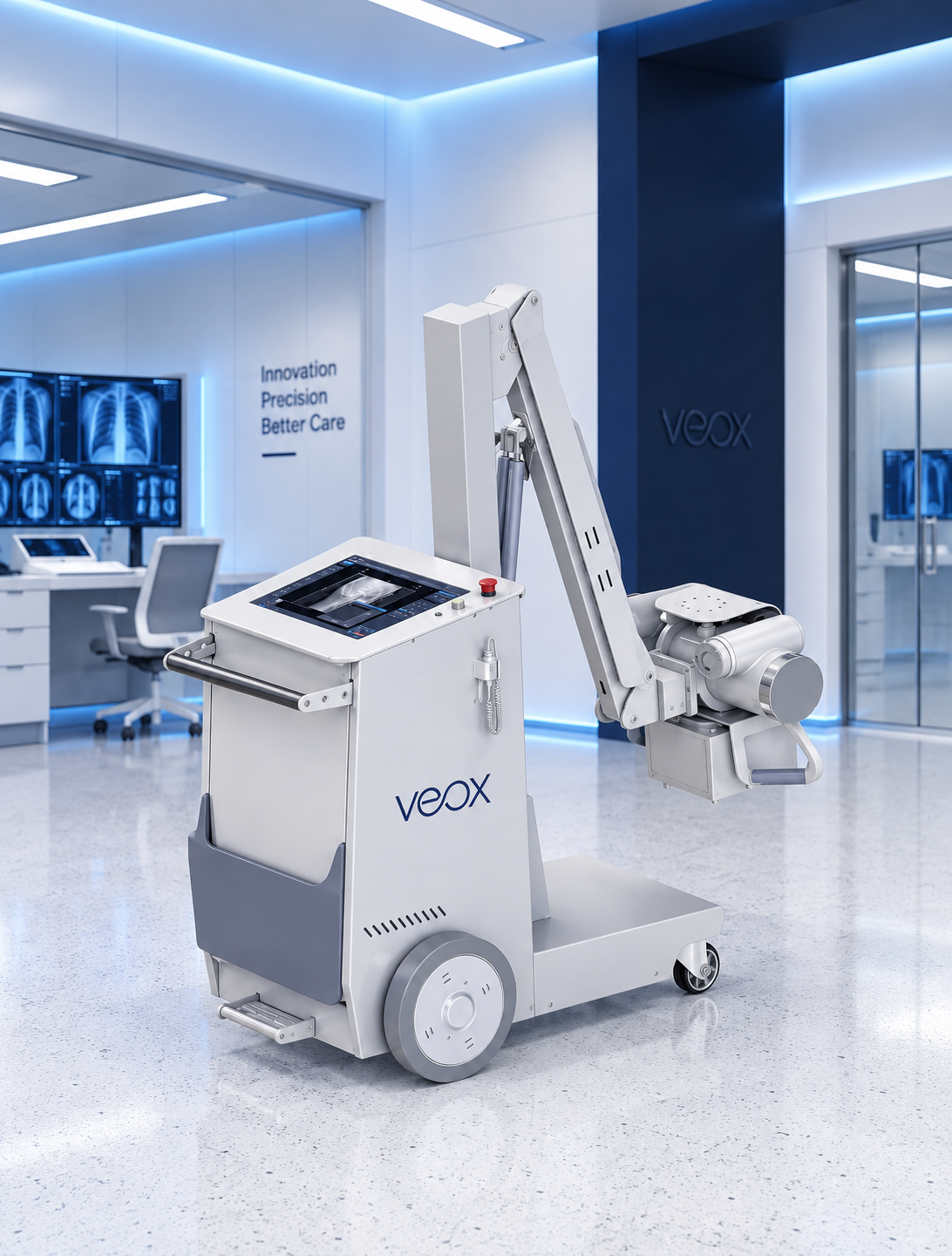
VEOX Move carries an integrated ultra-capacitor bank rather than depending on a wall socket at the point of use. Charge is stored and delivered on demand, which supports fast exposure readiness during ward rounds and keeps the unit working through a critical care sequence without hunting for an outlet behind a bed crowded with equipment.
That matters most in the environments where mobile radiography is actually used. In an ICU bay or a resuscitation room, the difference between a unit that is ready and a unit that is charging is a delayed clinical decision.
- ›Integrated ultra-capacitor bank supporting rapid exposure readiness
- ›Continuous operation through ward rounds without dependence on local mains at the bedside
- ›Compact chassis sized for corridors, lift doors and crowded bed spaces
Configure the Mobile Unit Around the Way the Ward Works
An ICU, an emergency department and a general ward do not place the same demands on a mobile X-ray unit. The MX Series is specified around the real environment it will be pushed into every day.
Digital and Analog Under One Model Name
Both configurations sit under MX 20K and MX 32K with no suffix, so a facility can standardise on a single model designation across mixed requirements. Digital configurations include a flat panel detector and a built-in workstation from the source specification.
Wireless Flat Panel Detector
Detectors are supplied from the VEOX View VX range. A wireless panel can be slid behind a patient without disturbing lines, drains or monitoring, which is the practical reality of imaging a ventilated patient.
Built-In Acquisition Workstation
Acquisition, review and PACS routing run on board through VEOX Workstation WX, so the image is checked at the bedside and sent onward without a second trip. A trolley is offered as a configuration or accessory only, never as a separate model.
VEOX Move MX Series Models Compared
The MX Series covers two generator outputs. Selection is driven by the clinical departments the unit will serve, the patient profile and how far the unit travels in a normal shift.
| Model | Positioning | Typical Environment | Configuration |
|---|---|---|---|
| MX 20K | Compact mobile radiography | General wards, clinics, smaller hospitals, routine bedside chest and abdomen | Digital or analog |
| MX 32K | Higher output mobile radiography | ICU, emergency, operating and recovery areas, larger patients and denser projections | Digital or analog |
Full generator, tube, detector, workstation, battery, dimensions, exposure and digital workflow specifications are provided in the MX technical catalogue during the specification stage.
MX Series Configuration at a Glance
The table summarises how a VEOX Move unit is normally specified. Detector choice, workstation configuration and accessories are set against the departments the unit will serve.
Mobility is not only a chassis question. Corridor width, lift dimensions, floor surfaces and the amount of equipment already crowding a bed space all shape whether a mobile unit is genuinely usable, and those conditions are reviewed during specification.
Discuss your ward and ICU requirements| System type | Mobile digital radiography unit, bedside and ward use |
|---|---|
| Models | MX 20K, MX 32K |
| Configurations | Digital and analog under the same model names |
| Power | Integrated ultra-capacitor bank, source specified |
| Detector | Flat panel detector from the VEOX View VX range |
| Workstation | Built-in acquisition workstation, VEOX Workstation WX |
| Workflow | Fast exposure readiness for emergency, ICU and bedside procedures |
| Trolley and accessories | Configuration or accessory only, no model suffix |
| Image routing | DICOM 3.0 and PACS workflow through VEOX Workstation |
| Applications | ICU, emergency, wards, isolation rooms, recovery |
Where the MX Series Fits
VEOX Move is specified for departments where the patient cannot reasonably be moved to a fixed radiography room.
Intensive Care Units
Serial chest radiography for ventilated patients, line and tube position checks, imaging around monitoring equipment.
Emergency Departments
Trauma and resuscitation imaging where the patient stays on the trolley and the clock is the constraint.
Inpatient Wards
Ward rounds and routine bedside radiography for patients with limited mobility, including isolation rooms.
Operating and Recovery
Theatre-adjacent and post-operative imaging where transporting the patient introduces avoidable risk.
Supply, Installation and Support
VEOX supplies medical imaging systems to hospitals, diagnostic imaging centres, distributors and healthcare projects internationally, with active coverage across the Middle East, North Africa, the GCC and wider African markets. Requirements differ by market, from tender documentation and regulatory paperwork to electrical supply conditions and service reach, so each enquiry is scoped against the conditions at the installation site rather than a single regional template.
Project Specification
System configuration, detector format and output are matched to the facility, the case mix and the room before quotation.
Commissioning and Training
Installation planning, commissioning and radiographer familiarisation are agreed inside the project scope, not left to delivery day.
Tender and Distributor Support
Technical documentation, catalogues and configuration sheets are supplied for tender submissions and distributor enquiries.
Frequently Asked Questions About VEOX Move
What is a mobile digital radiography system?
+
A mobile digital radiography system is a wheeled X-ray unit with an on-board generator, tube, power source and digital flat panel detector, designed to be taken to the patient rather than the patient taken to a radiography room. It is used for bedside imaging in intensive care, emergency departments, wards and recovery areas. The VEOX Move MX Series is this type of system, available as MX 20K and MX 32K.
What is the difference between MX 20K and MX 32K?
+
The difference is generator output and therefore the range of projections and patient profiles the unit handles comfortably. MX 20K is the compact configuration for general wards, clinics and routine bedside chest and abdomen work. MX 32K provides higher output for intensive care, emergency and operating areas, larger patients and denser projections. Both share the same platform, configurations and accessories.
Why does an ultra-capacitor matter in a mobile X-ray unit?
+
An integrated ultra-capacitor bank stores charge and releases it on demand, so the unit is ready to expose when it reaches the bed instead of depending on a mains socket at the point of use. In an ICU bay or a resuscitation room, where sockets are occupied and time matters, that readiness is the difference between an image now and an image later. VEOX Move carries an integrated ultra-capacitor bank as part of its source specification.
Can VEOX Move be supplied in an analog configuration?
+
Yes. Digital and analog configurations are both offered under the same MX 20K and MX 32K model names, with no separate suffix. This keeps model designation consistent across a mixed hospital fleet and simplifies the product range for distributors.
Does the mobile unit send images to PACS?
+
Digital configurations include a built-in acquisition workstation running VEOX Workstation WX, which supports DICOM 3.0, Store, Query and Retrieve, Modality Worklist, MPPS and PACS auto-send. Images are reviewed at the bedside and routed onward without returning the unit to a base station.
Which detector is used with VEOX Move?
+
Detectors come from the VEOX View VX range. A wireless panel is the practical choice for bedside work because it can be positioned behind a patient without disturbing lines, drains or monitoring equipment. Detector format is confirmed against the intended clinical use during specification.
Complete the Digital Imaging Workflow
VEOX Portable, PX
Portable and handheld X-ray units for field, outreach and highly mobile imaging.
Explore VEOX Portable ›VEOX View, VX
Wireless, wired and dynamic flat panel detectors for the MX unit.
Explore VEOX View ›VEOX Workstation, WX
Acquisition, viewing and PACS routing software on board the unit.
Explore VEOX Workstation ›Adding Mobile Radiography to Your Department?
Tell us which departments the unit will serve, your daily bedside volume and your detector preference. We will come back with the appropriate VEOX Move configuration and full technical documentation.