


Digital Mobile C-Arm Systems for Surgical and Interventional Imaging
VEOX C is a compact digital C-arm family for operating theatres and interventional suites. CX 5K covers 5 kW procedures with a choice of 9x9 inch 205 micron or 12x12 inch 150 micron flat panel detector, and CX 15K delivers 15 kW with a 12x12 inch 150 micron panel for heavier surgical workloads. Both are built on flat panel imaging with electric collimation, collision check and foot-switch acquisition.
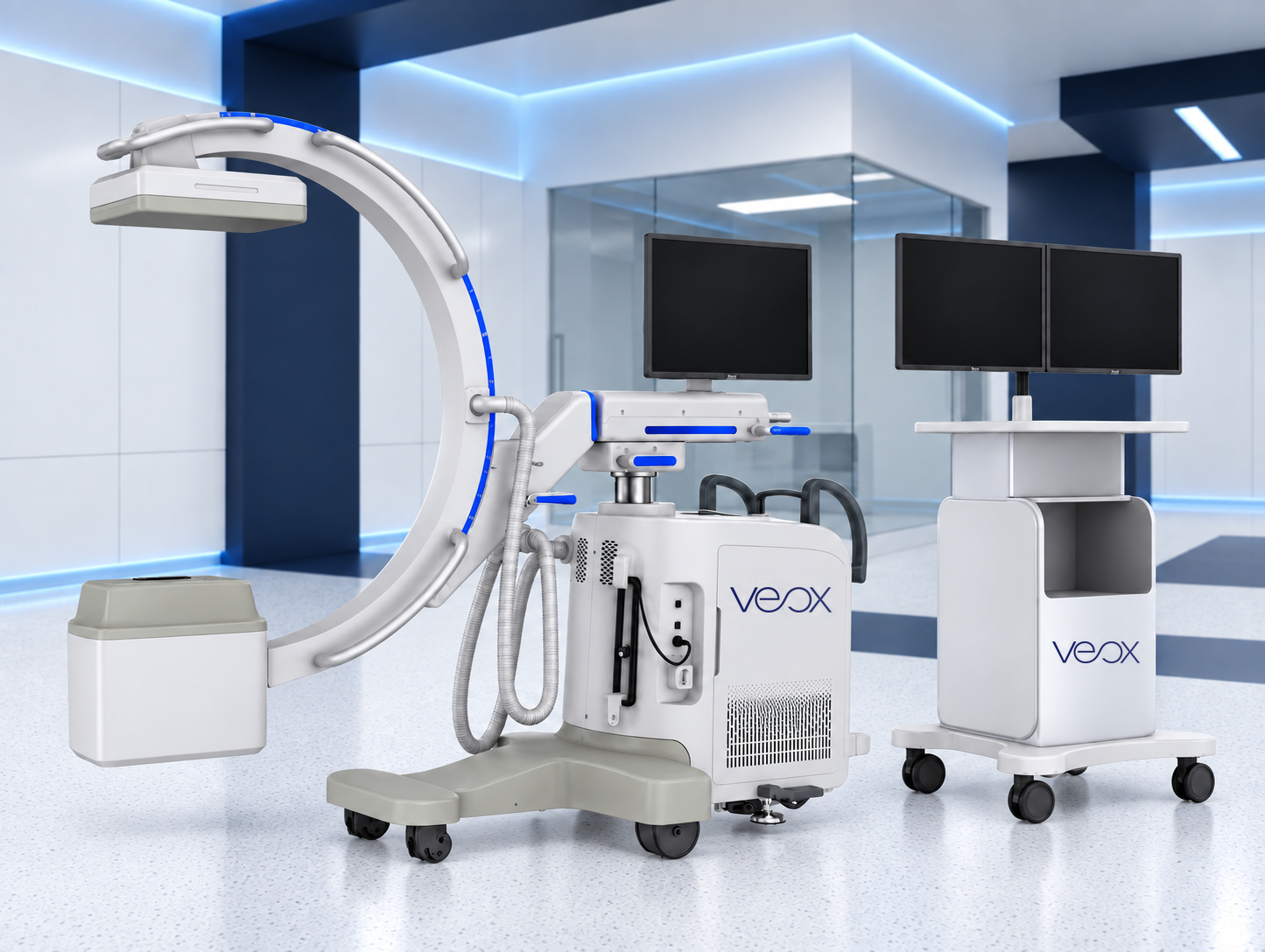
What Is the VEOX C CX Series?
The VEOX C CX Series is a family of compact mobile C-arms for image-guided surgery and interventional procedures. The C-shaped arm carries the X-ray tube at one end and a digital flat panel detector at the other, allowing the imaging plane to be angled around a patient on the operating table without breaking the sterile field.
Two commercial models cover the range. CX 5K is the 5 kW configuration and is offered with either a 9x9 inch 205 micron detector or a 12x12 inch 150 micron detector, both under the same model name. CX 15K is the 15 kW configuration with a 12x12 inch 150 micron detector, specified where procedures are longer, patients are larger or image demands are heavier.
Flat panel detection is the core of the imaging chain, delivering a square, distortion-free field across the whole detector area, which is a practical advantage over image intensifier geometry in orthopaedic and interventional work.
High Definition Imaging Inside the Sterile Field
The CX Series is built around flat panel detectors at 150 micron pixel pitch in the 12x12 inch configuration, giving a square imaging field with consistent geometry from centre to edge. For orthopaedic, trauma and interventional work, that consistency is what makes intraoperative measurement and implant positioning reliable.
Around the detector sit the features that decide whether a C-arm is workable in a live theatre: electric collimation to control dose and field without touching the patient side of the drape, a collision check to protect the arm and the table, and foot-switch image acquisition so the surgeon can take an image without breaking scrub.
- ›150 micron flat panel detection in the 12x12 inch configuration
- ›Electric collimation for field and dose control during the procedure
- ›Collision check and foot-switch image acquisition for theatre workflow
Configured for the Way a Theatre Actually Runs
A C-arm is judged on how it behaves during a case, not on a specification sheet. The CX Series is specified around positioning, control and the display setup in the room.
Two Detector Options Under CX 5K
CX 5K is offered with a 9x9 inch 205 micron detector or a 12x12 inch 150 micron detector. Both configurations stay under one commercial model name with no suffix, so the choice is made on clinical need and the detail is captured in the specification sheet rather than in the model designation.
Electric Collimation and Collision Check
Electric collimation controls the irradiated field during the procedure, supporting dose management without repositioning. Collision check protects the arm, the table and the patient during motorised positioning, which matters in a room already crowded with equipment and staff.
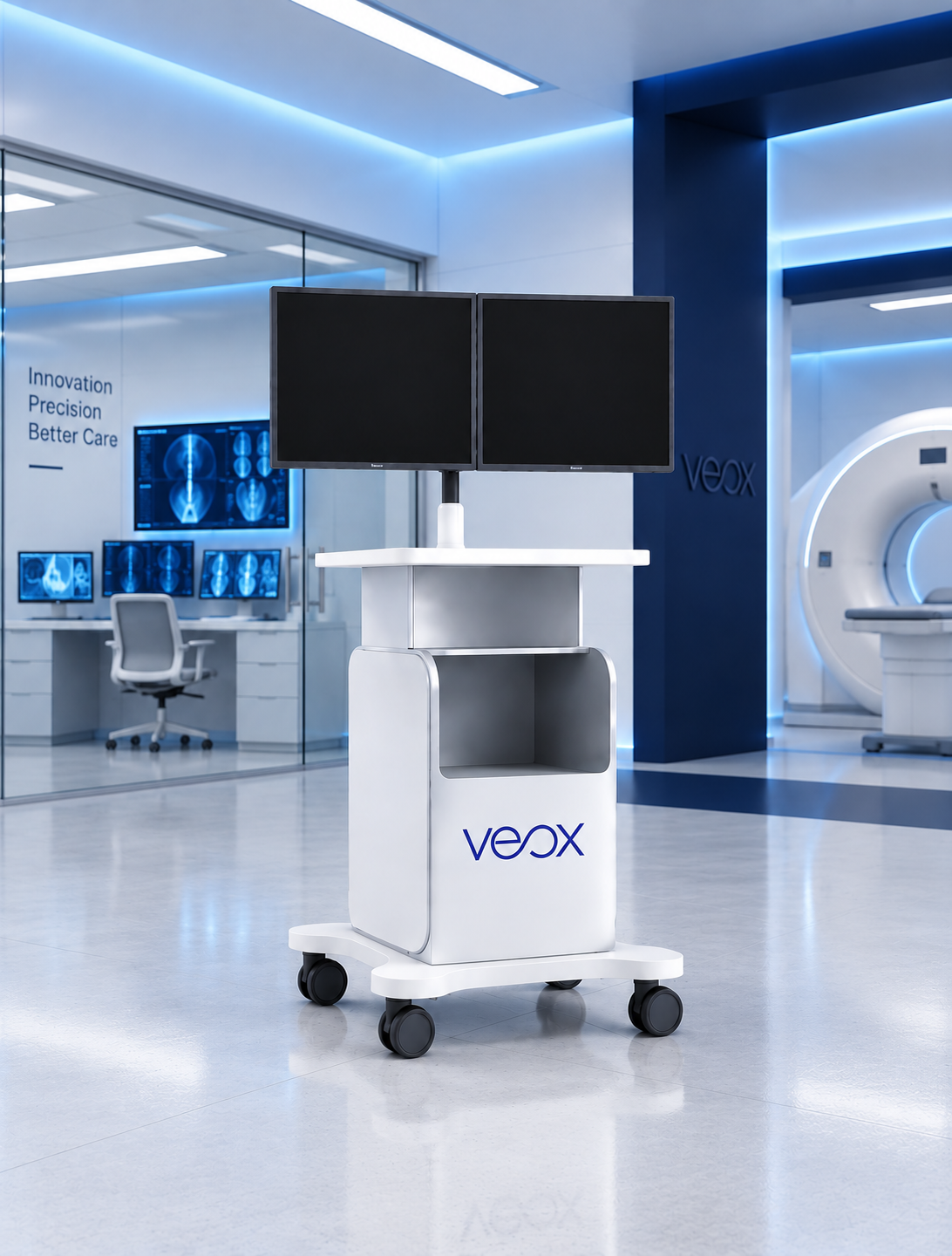
Mobile Workstation and Dual Screen
A mobile workstation with a two-screen option is supported, and image acquisition can be triggered by foot switch. Review, editing and PACS routing run through VEOX Workstation WX with full DICOM workflow.
VEOX C CX Series Models Compared
The CX Series covers two commercial models. Selection is driven by procedure type, expected case duration, patient profile and the imaging field the surgical team needs on screen.
| Model | Generator Output | Detector Configuration | Typical Procedures |
|---|---|---|---|
| CX 5K | 5 kW | 9x9 inch at 205 micron, or 12x12 inch at 150 micron | Extremity and hand surgery, pain management, day-case orthopaedics |
| CX 15K | 15 kW | 12x12 inch at 150 micron | Spine, hip and pelvis, longer trauma and interventional procedures |
Full detector, resolution, generator, tube, SID, movement and workstation data are provided in the CX technical catalogue during the specification stage.
CX Series Configuration at a Glance
The table summarises how a VEOX C system is normally specified. Detector size and pixel pitch are the decisions that shape the imaging result, and they are set against the procedure mix in the theatre.
The two CX 5K detector configurations remain one commercial model. Detector size, resolution and relevant configuration are communicated inside the product content and the specification sheet, which keeps procurement and distributor listings clean without hiding the technical difference.
Discuss your surgical imaging requirements| System type | Compact mobile digital C-arm for surgical and interventional imaging |
|---|---|
| Models | CX 5K, CX 15K |
| CX 5K output | 5 kW |
| CX 15K output | 15 kW |
| Detector options | 9x9 inch at 205 micron, 12x12 inch at 150 micron |
| Collimation | Electric collimation |
| Safety | Collision check during positioning |
| Acquisition control | Foot-switch image acquisition |
| Workstation | Workstation software, mobile workstation and two-screen option |
| Image routing | DICOM 3.0 and PACS workflow through VEOX Workstation WX |
Where the CX Series Fits
VEOX C is specified for image-guided procedures where the imaging system has to work around the surgical team.
Orthopaedic and Trauma Surgery
Fracture reduction, implant and screw positioning, intramedullary nailing and intraoperative alignment checks.
Pain Management
Injection guidance and interventional pain procedures where a compact arm and quick positioning define the workflow.
Urology and General Surgery
Stone and access procedures and general theatre use where fluoroscopic guidance is intermittent but essential.
Interventional Suites
Day-case and minor procedure rooms that need image guidance without the footprint of a fixed interventional installation.
Supply, Installation and Support
VEOX supplies medical imaging systems to hospitals, diagnostic imaging centres, distributors and healthcare projects internationally, with active coverage across the Middle East, North Africa, the GCC and wider African markets. Requirements differ by market, from tender documentation and regulatory paperwork to electrical supply conditions and service reach, so each enquiry is scoped against the conditions at the installation site rather than a single regional template.
Project Specification
System configuration, detector format and output are matched to the facility, the case mix and the room before quotation.
Commissioning and Training
Installation planning, commissioning and radiographer familiarisation are agreed inside the project scope, not left to delivery day.
Tender and Distributor Support
Technical documentation, catalogues and configuration sheets are supplied for tender submissions and distributor enquiries.
Frequently Asked Questions About VEOX C
What is a mobile C-arm?
+
A mobile C-arm is a wheeled X-ray imaging system with the tube and detector mounted on a C-shaped arm, allowing the imaging plane to be rotated and angled around a patient on an operating table. It is used for real-time image guidance during surgery and interventional procedures. The VEOX C CX Series is a compact digital C-arm family with flat panel detection, available as CX 5K and CX 15K.
What is the difference between CX 5K and CX 15K?
+
CX 5K is the 5 kW configuration, offered with either a 9x9 inch 205 micron detector or a 12x12 inch 150 micron detector, and suits extremity work, pain management and day-case orthopaedics. CX 15K is the 15 kW configuration with a 12x12 inch 150 micron detector, specified for spine, hip and pelvis work, larger patients and longer trauma or interventional procedures.
Which detector size should be specified?
+
A 12x12 inch panel at 150 micron pixel pitch gives a larger square field and finer detail, which suits spine, pelvis and general orthopaedic work. A 9x9 inch panel at 205 micron is the more compact option and is well matched to extremity, hand and pain management procedures. Both are available under CX 5K, so the choice is made on procedure mix rather than model selection.
What does collision check do?
+
Collision check monitors the C-arm during motorised positioning to prevent contact with the operating table, the patient or surrounding equipment. In a theatre where the arm is being driven into position around drapes, staff and instrument trolleys, it is a practical safety function rather than a marketing feature.
Is a dual monitor setup available?
+
Yes. A mobile workstation with a two-screen option is supported, which allows a live image and a reference image to be displayed at the same time. Image acquisition can be triggered by foot switch so the surgeon can capture an image without breaking scrub.
Does the CX Series connect to PACS?
+
Images are handled through VEOX Workstation WX, which supports DICOM 3.0, Store, Query and Retrieve, Modality Worklist, MPPS, DICOM printing and PACS auto-send. Intraoperative studies are routed into the same archive as the rest of the department without a separate export step.
Complete the Digital Imaging Workflow
Specifying a C-Arm for Your Theatre?
Tell us your procedure mix, expected case volume and display requirements in the room. We will identify whether CX 5K or CX 15K is the right configuration and which detector suits the work.